Can You Really Change the World Starting With One Choice?
The world feels broken, but what if the solution isn’t out there—it’s within you? Every thought, every reaction, every choice shapes…

 It is 25 years since cricket commentators Brian Johnston and Jonathan Agnew famously got the uncontrollable giggles on live radio, while reporting on that day’s Test Match between England and the West Indies.
 Humans have evolved a disproportionately large brain as a result of sizing each other up in large cooperative social groups, propose researchers.
 We all experience the ups and downs of life sometimes. We might be treated badly by others or miss out on something we think we deserve, like a promotion at work.
 Older African Americans and Latinos have an edge over whites when it comes to being able to quit smoking, according to a study of nearly 3,000 smokers.
 How many times a day do you check your smartphone? According to a recent survey, the typical American checks once every six-and-a-half minute.
 When parents observe shyness in their child, they may wonder if it is normal or cause for concern. For instance, in social situations, the child may cling to their parent, be hesitant to speak, reluctant to interact with others, and play alone when in groups more often than other children their age.
 How does the architecture of our brain and neurons allow each of us to make individual behavioral choices? Scientists have long used the metaphor of government to explain how they think nervous systems are organized for decision-making.
 Scientists have for the first time watched the human brain making a purely voluntary decision to act. Unlike in brain imaging studies where researchers watch as people respond to cues or commands, Johns Hopkins researchers found a way to observe people’s brain activity as they made choices entirely on their own.
 It is generally thought that science helps good ideas triumph over bad. The weight of evidence eventually pushes false claims aside.
 The notion that our minds produce thoughts automatically was a breakthrough insight for me. For years, I battled to still my mind, to stop thinking. Once I embraced the perspective that my thoughts are another sense, my relationship with thinking changed.
 As social species, the social networks of lizards, hyenas, and dolphins influence every pivotal aspect of their lives: finding a mate, reproducing, getting sick, or surviving.
 When rats are given an anti-anxiety medication they become less empathetic and are less likely to help free companions that are trapped.
 Funky moods obscure our experience for hours, days, weeks, or even longer. Left unattended, they shape our personalities and determine the quality of our lives. We think that we have no control over our moods but the truth is quite the contrary.
 In a 1997 U.S. News and World Report survey, 1,000 Americans were asked the following question: “Who do you think is most likely to get into heaven?” According to respondents, then-president Bill Clinton had a 52 percent chance; basketball star Michael Jordan had a 65 percent chance; and Mother Teresa had a 79 percent chance.
 In early May, with Donald Trump on the verge of solidifying the Republican nomination, his opponent Ted Cruz ranted to the press
 No matter what your field, or how much you love your job, you’re always going to have days that drain you. Days where you feel exhausted and stressed, days that you are happy to see come to an end. When you are finally done with work and you get home to unwind, there are some healthy ways to go about it.
 How come some people love wild roller coaster rides, while others are scared of them? It all starts with your thoughts! It really is up to you in the end. If you have the mechanism to be afraid, you also have the mechanism to enjoy life and move through anxiety!
 If we only knew how many times we are rescued by divine intervention, we would completely trust this higher power. There would then be nothing to worry about – ever! Joyce and I had yet another powerful reminder of this truth – and divine miracle – last week.
 We feel good when we do a good deed, so there must be a psychological benefit to helping others? But how can we know for sure? The best way to study the health benefits of kind deeds is to look at studies of volunteering.
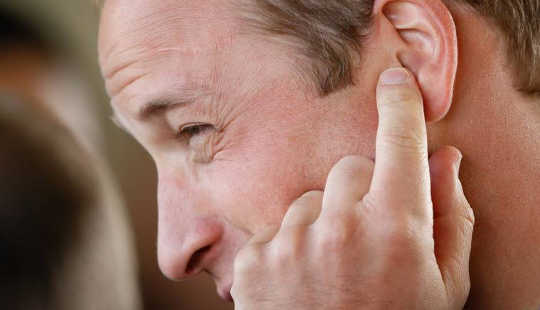 Are you imagining music in your head? If so, it’s probably a certain Kylie Minogue hit. Sorry. But hopefully, once you’ve read this, you’ll be in a better position than you were before to get rid of it, or any other imaginary music playing on repeat in your mind’s ear.
 When we talk face-to-face, we exchange many more signals than just words. We communicate using our body posture, facial expressions and head and eye movements; but also through the rhythms that are produced when someone is speaking.
 When was the last time you opened your laptop midconversation or brought your desktop computer to the dinner table? Ridiculous, right? But if you are like a large number of Americans, you have done both with your smartphone.
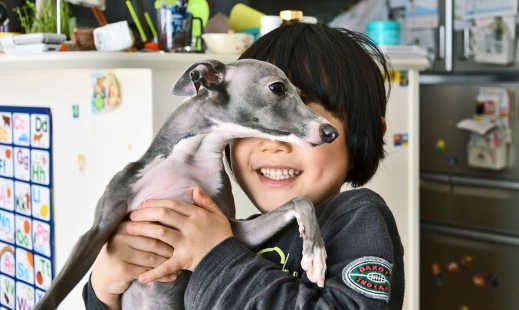 In addition to mixing up sibling for sibling and daughter for son, study participants frequently called other family members by the name of the family pet—but only when the pet was a dog.